BrusselsLife · Editorial & Local Business UX
Redesigning a city guide so readers stay and businesses get found
A decade-old Brussels lifestyle platform had steady traffic but weak return visits. We rebuilt content discovery and wove paid business listings into the reading experience, so engagement and ad revenue moved together.
Impact
Bounce rate down 6 to 10%, ad revenue up 15 to 30%, and more inquiries to business profiles after integrating listings directly into the reading experience.
Company
BrusselsLife, a Brussels lifestyle and city guide platform publishing editorial articles, business listings, and local recommendations for over a decade.
Platform
A content-heavy web platform with around 5,000 daily readers, more than 60% on mobile, monetised through paid business profiles and sponsored listings alongside editorial content.
Focus
Content discovery, a mobile-first reading experience, and connecting editorial content with local business visibility.
Role
UX and product design lead for the redesign: research, information architecture, wireframes, high-fidelity design, and usability testing.
Prototype
Context
BrusselsLife is a lifestyle and city guide platform covering events, culture, dining, and local businesses in Brussels. The site publishes editorial articles alongside business listings and local recommendations, drawing thousands of readers exploring the city.
At the time of the project, the platform had been online for more than a decade and had built up a large content library with steady daily traffic of around 5,000 visitors.
The business model relied on editorial content as much as it relied on paid business profiles and sponsored listings, which let local businesses promote their services within the platform.
The goal of the redesign was to improve the digital reading experience while making it easier for readers to discover relevant local businesses.

The Challenge
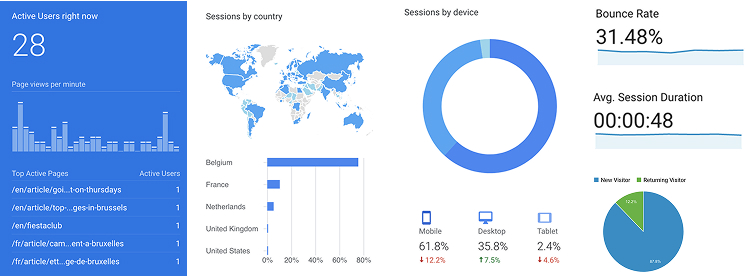
The platform had grown organically for years, which created real usability and engagement gaps. User behaviour data pointed to a few consistent problems.
- —A large share of traffic landed directly on article pages from search engines and social media
- —More than 60% of users were browsing from mobile, but the reading experience wasn't built for smaller screens
- —Some sections, particularly business pages, showed high bounce rates
- —Search functionality was underused, pointing to a discoverability problem
- —Returning visitors were declining, a sign the experience lacked long-term engagement
At the same time, paid business listings were an important revenue stream, but they weren't effectively woven into the reader's journey.
The challenge was twofold: improve content discovery for readers, and increase visibility and engagement for local business profiles. The redesign had to support editorial storytelling and the platform's commercial model at once.
The Real Problem
The brief framed this as a content discovery problem. The real problem was revenue: the business listings that funded the platform sat in their own directory, disconnected from the articles people actually came to read.
Readers had no reason to find them. Fixing discovery meant fixing that disconnect, not just tidying navigation.
My Role
I worked on UX and product design for the BrusselsLife redesign.
- —Analysed user behaviour and existing site data
- —Defined key user flows for content discovery
- —Structured the information architecture
- —Designed wireframes and interaction flows
- —Created high-fidelity interface designs
- —Ran usability testing sessions with real users
- —Refined the experience based on what testing surfaced
The goal throughout was a digital experience that balanced reader engagement, content discovery, and business visibility, not one at the expense of the others.
Design Approach
Rather than a visual refresh, the redesign focused on how people moved through content and found what mattered to them.
Design the article page as an entry point, not a dead end
Since most users landed directly on articles, we treated the article page as the platform's real front door. Related articles, category navigation, and editorial recommendations gave readers a next step instead of a full stop, turning a single-article visit into a longer browsing session.
Reorganise navigation around clear categories
Content was regrouped into clear sections, fashion, culture and lifestyle, technology, video, and news, so the site's structure matched how readers actually thought about the content, not how it had accumulated over a decade.
Put business listings inside the story, not beside it
Paid business profiles moved out of an isolated directory and into relevant editorial context, so a local business could appear alongside an article about its category. The trade-off was deliberate: less separation between editorial and commercial content, in exchange for listings readers would actually see.
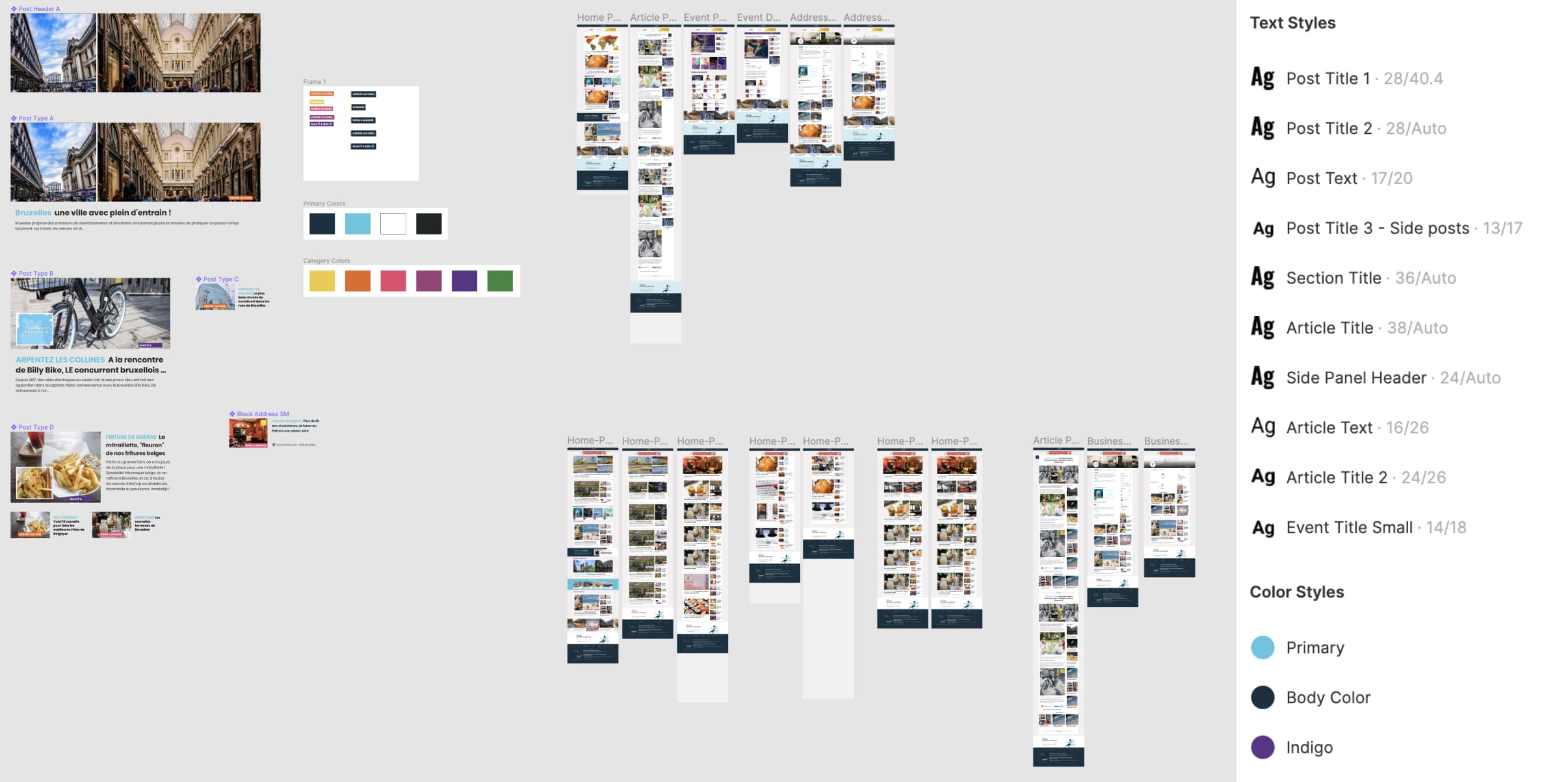
Move fast from sketch to high fidelity
Early sketches explored layout concepts quickly, before moving to mid-fidelity wireframes and then high-fidelity designs. Iterating this way surfaced layout and content hierarchy problems early, before any of it reached development.
Accessibility
With more than 60% of traffic on mobile, readability and navigation on small screens were treated as core design constraints, not a secondary pass after desktop was finished.
- —Mobile-first layouts across article and business pages
- —Improved typography and article hierarchy for long-form reading
- —Clearer visual grouping between editorial and business content
- —Simpler navigation between categories and articles
Usability testing surfaced specific friction points, oversized content blocks and unclear navigation among them, and those findings drove layout changes before the interface was finalised.
Impact
The redesign moved both sides of the platform at once, reader engagement and commercial performance.
Bounce rate
↓ 6–10%
Lower bounce rate, most notably on business pages, after listings moved into editorial context.
Ad revenue
+15–30%
Higher ad revenue as business visibility improved across the reading experience.
Engagement
Longer sessions
Longer average session duration and improved return-visitor retention.
Business visibility
More inquiries
Increased inquiries to business profiles once listings sat inside the reading flow.
Better content discovery and better business integration turned out to be the same problem, solved once.
Reflection
This project made clear how much editorial platforms need to be designed for both the reader and the business model behind them. Readers come for content, but well-placed UX can connect them to relevant local businesses without it feeling like an ad.
Working on this redesign sharpened how I think about content-driven UX, editorial information architecture, and balancing storytelling with monetisation using real analytics rather than assumptions.
Continue Exploring
Explore more work
Home
Back to portfolio overview
Return to the main work selection page.
Next Read
Enterprise UX at Allianz
A multi-market enterprise case study focused on workflows, scale, and accessibility.
Also View
WoahBiz Growth Platform
A product case study about simplifying CRM and marketing tools for small businesses.