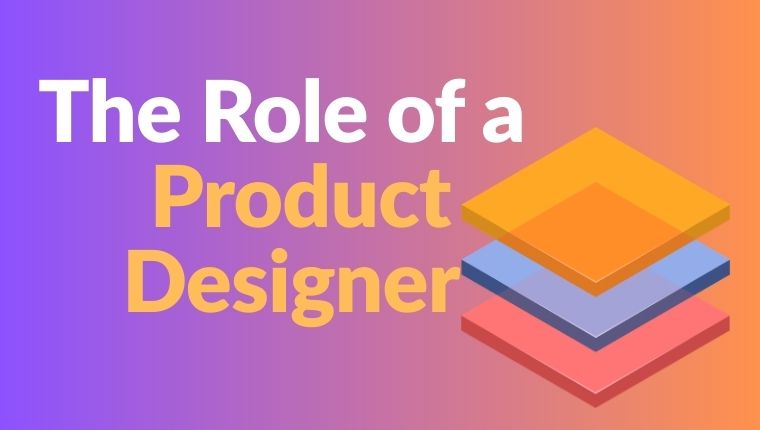
One of the most common misunderstandings about product design is that it starts when the screens start.
People often picture product designers as the ones who make things look polished at the end. Nice layouts. Clean buttons. Better visuals. That work matters, but it is only one part of the role.
In practice, product design starts much earlier. It begins with understanding the problem, the business context, the users involved, and the outcomes the product needs to support. The interface is the visible result, but a lot of the real design work happens before anything looks like UI.
That is what makes product design interesting to me. It sits in the space between business thinking, user experience, and execution. It is less about decorating screens and more about helping teams solve the right problem in a way that is useful, workable, and sustainable.
The three layers of product design
I often think about product design as three connected layers: Product, UX, and UI.
UI is the part people see first, but it is only the visible layer. Under it sit the experience decisions that shape how the product works. Below that sits the product layer, where priorities, outcomes, and business direction are defined.
Layer 1
Product
Vision, priorities, outcomes, business context, and problem framing.
Layer 2
UX
Research, flows, structure, interactions, experiments, and usable journeys.
Layer 3
UI
Typography, color, visual hierarchy, accessibility, and design-system consistency.
When these layers are disconnected, products feel fragmented. You get beautiful screens with weak logic, or strong strategy with poor execution. Strong product design keeps these layers aligned.
Product layer: business and strategy
This is the part that gets overlooked most, especially by people outside design.
At the product layer, the work is not about choosing colors or arranging cards on a screen. It is about understanding what the product is trying to achieve and whether the proposed solution supports that goal.
That includes questions like: what business outcome are we trying to drive? What problem is worth solving now? Which opportunity matters most? What KPIs or product signals will tell us the work is useful? Which trade-offs are acceptable, and which ones create too much risk?
In complex products, especially enterprise environments, this matters a lot. Teams rarely design in a vacuum. There are operational constraints, technical dependencies, regulatory expectations, existing workflows, and multiple stakeholder perspectives. A product designer has to work through those realities, not around them.
That means contributing to prioritization, helping frame opportunities, challenging vague requests, and making sure the team solves a meaningful problem instead of shipping a feature because it sounded reasonable in a meeting.
It also means aligning design decisions with product vision. A good product designer knows a screen is never just a screen. It is part of a larger system, a roadmap, and a set of outcomes the business is trying to reach.
UX layer: turning strategy into experience
If the product layer defines what matters, the UX layer defines how it should work for people.
This is where research, user journeys, task flows, information architecture, prototypes, and usability testing shape the product in a practical way. It is the layer that turns business direction into something people can understand and use.
User research is not about collecting quotes. It is about finding the structure behind behavior. What are users trying to achieve? Where are they losing time? What workarounds already exist? Which assumptions are we making that need testing?
From there, UX work often means defining the problem more clearly, exploring flows, reducing friction, and matching the product to the reality of the user's context. In some projects that means wireframes and prototyping. In others it means simplifying decision paths, restructuring information, refining copy, or running small experiments to learn what improves the experience.
This is also where target groups matter. Different users bring different levels of familiarity, urgency, pressure, and confidence. A good experience does not come from designing for an abstract user. It comes from understanding specific people, specific tasks, and specific environments.
Strong UX is often invisible. It feels clear, logical, and steady. It reduces hesitation. It helps the user move forward without thinking about the interface more than they need to.
UI layer: the visible part of the work
UI is the part of product design people notice most quickly, and for good reason. It affects readability, hierarchy, confidence, and perceived quality within seconds.
Typography, color, spacing, composition, microinteractions, and visual consistency shape how trustworthy and understandable a product feels. Design systems become important here because they help teams hold quality across pages, features, and workflows instead of treating every screen as a separate decision.
Accessibility belongs here too, and not as an afterthought. Contrast, focus states, keyboard behavior, text clarity, and predictable interaction patterns all decide whether the interface is usable. Accessible UI is not only about compliance. It makes products clearer and more resilient for everyone.
Still, UI is only one part of product design. A polished interface can raise confidence, but it cannot fix weak product thinking or a poor user flow. If the underlying logic is broken, visual polish only hides the problem for a while.
Product design is about connecting the dots
What makes product design valuable is not that it owns one isolated deliverable. It is that it connects business goals, user needs, and execution.
That connection is collaborative by nature. Product designers work closely with product managers, engineers, stakeholders, researchers, content teams, and sometimes data or operations teams. The role sits in the middle of many conversations and helps turn them into decisions that move the product forward.
Sometimes that means pushing for clarity when requirements are vague. Sometimes it means translating business ambition into a simpler workflow. Sometimes it means spotting where the user experience is fighting the operating model of the business. A lot of the job is connective work.
Why this matters
Companies do not only need designers who make interfaces look good. They need designers who help products make sense.
When product designers think beyond screens, the result is usually better prioritization, clearer flows, fewer usability issues, and stronger alignment between what the business wants and what users need. That leads to better product outcomes, better team decisions, and better user experiences over time.
This matters even more in complex digital products, where poor decisions compound quickly. A weak flow, unclear hierarchy, or badly framed problem creates operational cost far beyond the design team. Good product design reduces that risk early.
Product design is not about making interfaces look good. It is about solving the right problems in the right way.
Understand what matters, shape the experience around real people, and turn that into interfaces that are clear, usable, and aligned with the product's goals. The visual layer is important. The real value is in the problem you choose to solve.